

After seven years, Jvcki Wai is back with a vengeance. The South Korean rapper and singer-songwriter, known for her genre-blending style and unapologetic lyricism, has returned with her highly anticipated full-length album, MOLLAK. A bold mix of hyperpop, trap, and experimental noise, the album captures Jvcki Wai at her most raw and vulnerable, opening up about themes of self-doubt, resilience, and personal struggle. It’s a journey that takes listeners through destruction, self-discovery, and the chaos of it all.
Teaming up once again with producer vangdale, Jvcki Wai has crafted a sound that pushes boundaries while staying true to her roots. MOLLAK isn't just an album—it's a sonic exploration that reflects her growth as an artist and her commitment to authenticity. In this interview, Jvcki Wai reflects on the album's creation, the emotions that fueled it, and how it represents her evolution as both an artist and an individual.
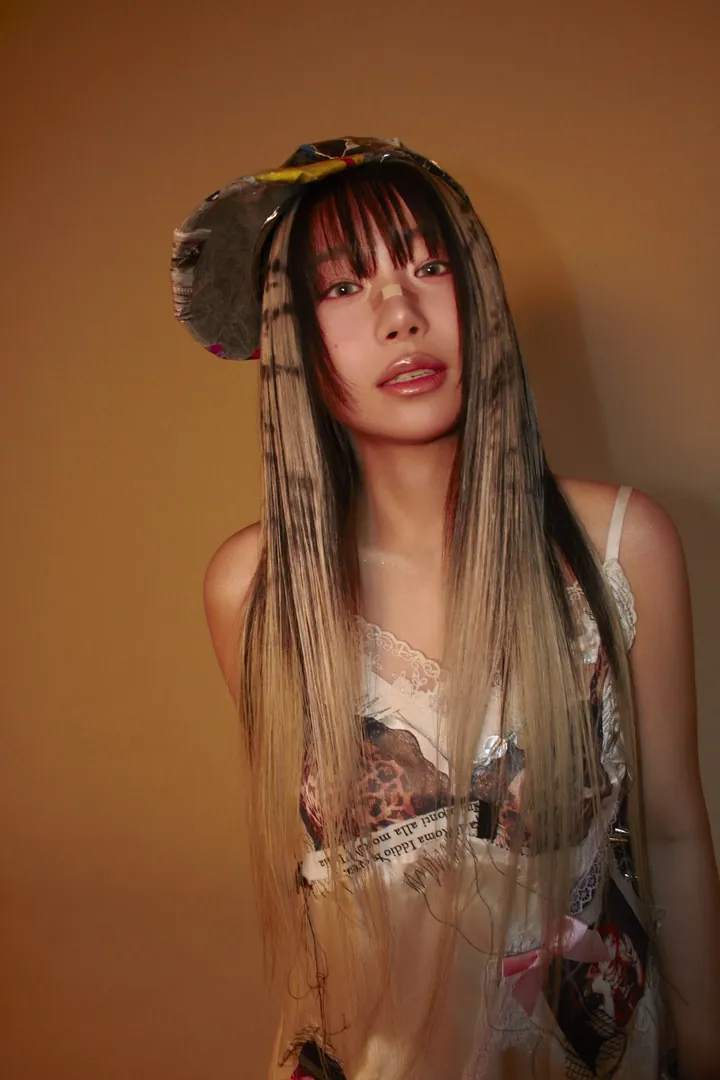
MOLLAK marks your first full-length release in seven years. What emotional or personal landscape inspired this body of work?
Ironically, MOLLAK was the album I dreaded releasing more than anything. It reveals my most vulnerable sides and delivers messages that could potentially affect some listeners negatively. The more I tried to avoid it, the clearer the themes, lyrics, and titles became in my mind. I was torn about the release right up until the moment, but the music had already been completed and it was out before I could muster the courage. Now, upon its release, I have no regrets.
MOLLAK blends hyperpop, trap, and digital noise into a genre-defiant sonic rush. How did you and vangdale decide on this direction?
Incorporating electronic music isn’t a bold move for me. I’m not trying to make a cliched comment about how dance music is dominating the global scene, it’s simply that I have spent the most time in my life listening to electronic music. Obviously, it is a broad genre that makes it hard to pinpoint a specific style I was focused on. I’ve collaborated with multiple electronic-based DJs and producers through performances and releases.
In Korea, the electronic music scene is practically nonexistent with only a handful of artists, so I naturally collaborated with hip-hop artists in the underground club scene. Even while making hip-hop music, I’ve continued to love and follow electronic music, including at least one electronic-based track per release. MOLLAK is the expansion of such sound across the whole album. Similarly, although vangdale is well-known as a hip-hop producer, his roots are in electronic music. Hence, the sound direction wasn’t a big challenge, but an enjoyable process for us.
The album carries a dark, sometimes chaotic aesthetic. Were there particular visuals, moods, or moments that guided your songwriting?
I had to dig up a lot of negative emotions to finish the lyrics for MOLLAK. So just like in the lyrics, there were multiple moments when I genuinely wanted to quit. During those times, I kept recalling a moment from this January; I was in LA celebrating New Year's with my friends when the wildfires broke out near our Airbnb. People were abandoning their cars to evacuate, the sky turned black as the air suffocated me.
We evacuated by driving out to Palm Springs. I’d never experienced such an intense natural disaster up until that moment and will never forget the freshness of air after we fled. Making music felt like nothing compared to a life-threatening situation. I kept reminding myself of those moments and tried to stay calm to finish MOLLAK.
Among the eight tracks, are there any that pushed you creatively or emotionally more than others?
‘Choom’, and ‘Necrophilia’. The common challenge with both tracks was that I had to convey highly complex messages in the simplest way possible. Over time, I developed my own standards for lyrics. No matter how difficult or heavy the theme may be, I won’t put out lyrics that sound or feel pretentious.
To me, lyrics aren’t poetry or literature. They’re closer to lines in a script, spoken by someone caught in an emotional moment. If that person suddenly used flowery or academic words, wouldn’t it feel unnatural and forced? Of course, this is my personal take and there is no right answer.
You’ve expressed a more intense, unfiltered side of yourself on this album. How do you feel MOLLAK redefines your artistry?
I would like to answer this in consideration of both external and internal perspectives. Externally, I expect there may be some confusion about Jvcki Wai’s identity. The public so far has viewed me as a “rapper rooted in Korean hip-hop and trap music.” However, I have never defined or limited myself in that way. Through MOLLAK, I feel like I have made a significant jump by breaking genre conventions and creating something new.
I’m becoming increasingly confident in my style and writing. Some might view it as a shortcoming that I approach my work with the mindset of a lyricist or writer rather than that of a traditional musician. However, I believe that perspective is precisely what distinguishes me from other artists.
vangdale’s production is central to the album’s sound. What was your collaborative dynamic like in the studio?
During the MOLLAK album work, I made a somewhat unusual request to vangdale. I asked him to produce the tracks in the exact order as they appear on the tracklist. I had already finalized the titles, themes, lyrics, and track order, and I wrote and recorded everything in that same sequence. While this method may have seemed inefficient, I think it allowed vangdale to better immerse himself in the album’s narrative. I’m thankful that vangdale accepted such a specific request.
Before this album, you and vangdale dropped 'Spoil U'. How did that track lay the groundwork for MOLLAK?
‘Spoil U’ didn’t necessarily shape the direction of MOLLAK. I already had the album planned out before. I was looking for the right producer who could bring MOLLAK to life, and around that time, vangdale reached out with a demo of ‘Spoil U’. I grew a sense of trust for him as a producer while recording and releasing ‘Spoil U’. That’s why I proposed working on MOLLAK together and he agreed. ‘Spoil U’ ultimately was the catalyst for our continued collaboration.
The visuals for singles like ‘Narak’, ‘GG’, and ‘Wreck Car’ are striking. What was the creative process behind conceptualizing those music videos?
I honestly didn’t have much input in the visuals of MOLLAK. This may have been a risky decision in an era where visuals have become key to survival, but I left everything up to the team. Because I stayed out of it, everything turned out in ways I didn’t expect and felt kind of unfamiliar. But even though the visuals were shaped by perspectives different from mine, that bit of distance actually ended up fitting MOLLAK really well.
This is your first full project under AOMG. How has the label’s support shaped this phase of your career?
MOLLAK was created entirely on my own terms, without any external format or direction imposed on me. AOMG didn’t interfere with my vision but simply helped me realize it as I had planned. Rather than being a career milestone, MOLLAK was a reaffirmation of who I am as a creator.
For new fans discovering you through MOLLAK, what’s the one thing you hope they take away from the album?
MOLLAK is a record of myself and an exhibition of who I am. Neither yes nor no, neither hope nor despair. It simply exists, and that is enough. MOLLAK means downfall, but it also echoes the sound of rock. Even in destruction, there's a rhythm. It’s all about embracing what is, without the need for resolution.
Like what you read? Show our writer some love!
1