For DJ IKU, DJing began as a spark at a time when he needed it most. After an injury ended his childhood dream of becoming a professional soccer player, the Japanese turntablist found a new sense of purpose at DMC JAPAN FINAL 2002, where DJing, breakdancing, human beatboxing, and double dutch opened up a whole new world to him.
Since then, DJ IKU has built a career rooted in skill, instinct, and deep musical curiosity — from battle stages and technical routines to clubs, festivals, and international appearances. Known for blending scratching, doubles, beat juggling, wordplay, and open-format energy, he has become a DJ who can impress the heads without losing the dancefloor.
Ahead of his upcoming return to AVENUE Singapore, DJ IKU talks to Bandwagon about the moment that changed his life, what the battle scene taught him, the growth of Southeast Asia’s DJ culture, and why DJing continues to add colour to his world.
View this post on Instagram
You’ve mentioned that you discovered DJing after watching DMC JAPAN FINAL 2002. What do you remember about that moment, and what made you feel like turntablism was something you had to pursue?
At 18, after an injury had ended my dream of becoming a professional soccer player, I felt completely empty — mentally and emotionally. Then, I witnessed DJing, breakdancing, human beatboxing, and double dutch for the first time at DMC JAPAN FINAL 2002, and in a single night, it completely blew me away.
The feeling was almost like falling in love. I remember the fire inside me, which had almost gone out, suddenly burning bright again. Watching the DJs battle on stage in front of a crowd, defeating their opponents while the audience reacted to every moment, made me think, “I want to stand on that stage too.” That was the moment I decided to start DJing.
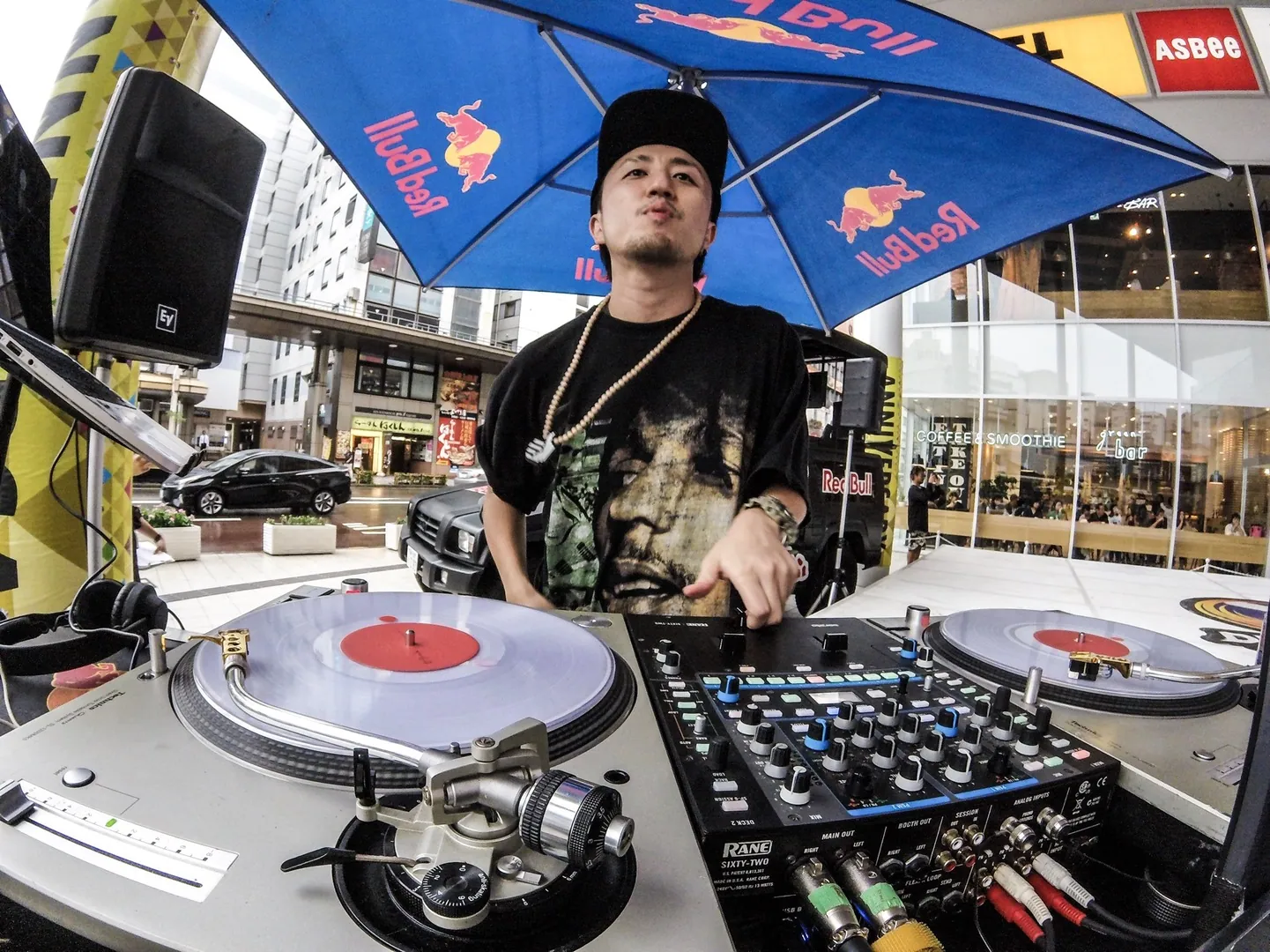
You competed in DMC JAPAN FINAL for several years before winning major battles like Red Bull Street Style DJ Battle Japan Final and Red Bull Thre3Style Japan Final. Looking back, what did the battle scene teach you that still shapes the way you DJ today?
The mindset behind trick mixes. Beyond turntablism techniques like scratching, doubles, and beat juggling, the battle scene taught me how to really dig into music itself — wordplay, sampling, finding original source material, and discovering unexpected connections between tracks.
You’ve also judged and supported DJ battles over the years. What do you look for in a battle DJ beyond technical skill?
Love for music, style, and surprise.
Your sets are known for mixing technicality with a party-focused open-format style. How do you balance showing your craft with keeping the dancefloor moving?
Of course, the balance depends on the party, but one thing I always keep in mind is not overdoing anything. Too much scratching or too many doubles can end up exciting only the DJs in the room while losing the crowd. I try to use familiar songs when doing tricks or technical routines, because that way, even people who aren’t DJs can still feel the impact and understand the skill behind it. That’s something I’m always conscious of.
You’ve spent more than two decades building your name through turntablism. What keeps DJing exciting for you now?
DJing has taken me to so many different places. It’s given me experiences, scenery, and connections with people that I never would have encountered otherwise. There’s a huge joy in feeling my world continue to expand through all of that. DJing is what adds colour to my life. That’s what DJing is to me.
In recent times, you’ve been spending more time across Southeast Asia. What has stood out to you about the club and DJ culture in this region?
Southeast Asia often gets grouped together as one region, but in reality, each country has its own musical trends and club culture. I find that really interesting. One thing that’s especially stood out to me recently is how much the nightclub and DJ scene in Vietnam has been growing and evolving.
View this post on Instagram
You were featured on ABEMA HIPHOP’s my name is, which looked at your life through DJing. What side of yourself did you hope people would see through that episode?
I normally don’t use social media to talk about DJ philosophy or complain about things, and I rarely post much about my private life either. So through that episode, I wanted people to see the thoughts and feelings I usually keep to myself — the history and experiences that shaped me up to this point, as well as my life in Thailand after relocating there. At the same time, I hoped it could show that there are many different paths and ways to live as a DJ. Maybe it could even serve as a kind of guidepost for someone coming up in the culture.
DJ technology has changed massively since you started, but turntablism is still rooted in physical skill and instinct. What do you think young DJs should learn before relying on tools, edits, or software?
I don’t think there’s a right or wrong order to it, but at some point, I hope young DJs come to realise that music and DJ culture both have deep histories behind them. Even the DJ equipment people use today is the result of years of development and the work of countless people before it became what it is now.
I think it’s totally fine to start DJing through fashion, curiosity, or the energy of youth — that’s how I started too. But I hope that one day, people begin asking themselves questions like, “Where did this music come from?” or “Who built the DJ scene in this city?” I think those moments of wanting to understand the history are really important.
You’ve shared stages and spaces with some huge names, from festival bills to national TV moments like NHK Kouhaku Uta Gassen. Is there one performance that changed how you saw your own career?
There have been many, but one performance that really stands out in recent years was BASTID’S BBQ in Toronto, Canada, in 2023. Performing outside of Asia — especially in Canada, which I was visiting for the first time — and receiving so much respect and praise afterward from the audience, local DJs, and the other artists meant a lot to me. Those memories are something I’ll treasure for the rest of my life.
As for performances I experienced as a member of the audience, I was deeply inspired in my twenties by the many legendary artists I watched perform at Billboard Live Tokyo. I used to go there often with an older mentor of mine. Even though we’ve lost touch over the years, I’d like to take this opportunity to thank KATO MAYAKO-san for introducing me to that world. I’m truly grateful.
Finally, you’re set to play AVENUE Singapore soon. What can fans expect from your upcoming gig there?
Yeah, I had such a great time last time that parts of the night are honestly still a blur. This time too, I want to bring a balance of familiarity and surprise, along with the raw live feeling that only hands-on DJing can create. I’m really looking forward to seeing everyone in Singapore again.
DJ IKU plays AVENUE Singapore on Friday, 19 June. Click here for more information.
Like what you read? Show our writer some love!
-