For KSHMR, reinvention has never meant leaving the past behind. Before becoming one of dance music’s most recognisable names, the producer born Niles Hollowell-Dhar was part of The Cataracs, the duo behind era-defining hits like ‘Like A G6’ and ‘Bass Down Low’. But when he stepped into the world of KSHMR, he wiped the slate clean — and built a sound that felt bigger, more cinematic, and deeply tied to his roots.
Over the years, that sound has grown into something unmistakably his: festival-ready drops, sweeping melodies, Indian and world music influences, and a flair for storytelling that turns dance tracks into full-blown worlds. From ‘Jammu’ to KARAM, his recent Indian hip-hop project featuring the likes of MC Stan, KR$NA, Raftaar, Raja Kumari, Seedhe Maut, and more, KSHMR has continued to push his music closer to the stories, sounds, and communities that shaped him.
Ahead of his return to MARQUEE Singapore on 24 July, KSHMR speaks to Bandwagon about reinvention, Indian hip-hop, the legacy of Sounds of KSHMR, orchestral performances, and what fans can expect from his upcoming Singapore show.
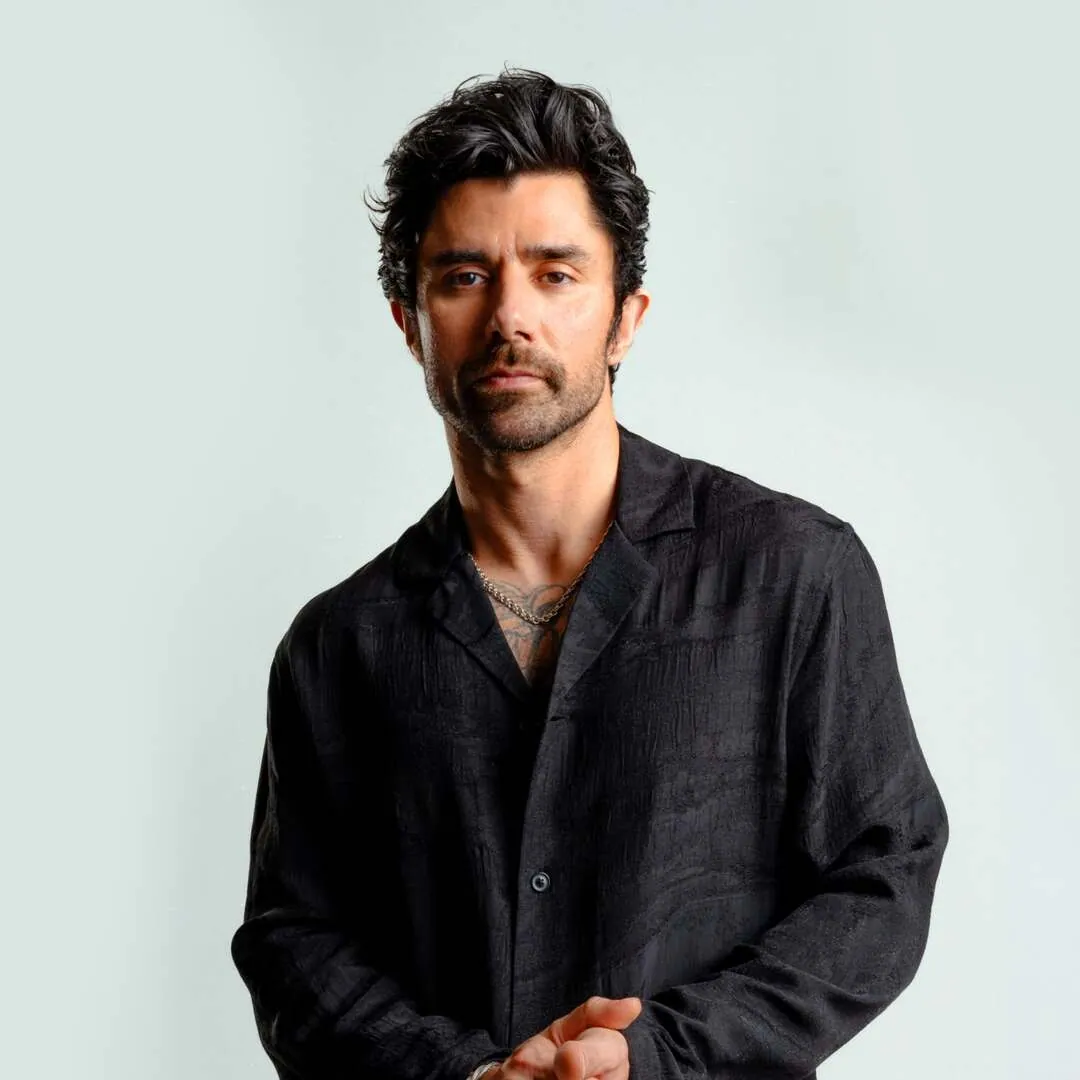
You have lived several creative lives — from The Cataracs and ‘Like A G6’ to becoming KSHMR. When you look back now, does it feel like one continuous story or a series of reinventions?
It definitely does feel like at least two reinventions. The initial invention of The Cataracs and my whole career in hip-hop sort of smoothly transitioned into the pop world. I think that was a very similar skillset because even in my hip-hop stuff, I was experimenting with sort of a pop-hybrid kind of thing.
The real reinvention came when it was clear that wasn’t going to work anymore, and I transitioned into KSHMR. I really wiped the slate clean and had to prove myself all over again.
The name KSHMR has always felt deeply personal, with ties to your Indian heritage and family history. For fans who may not know the story, can you share the connection behind the name, and how your relationship with it has evolved over the years?
The explanation for my name is really simple. My family is from Kashmir on the paternal side, and it was something taught to me throughout my childhood that I didn’t care too much about then. It was only later in my life, spending more time in India and with my relationship with my grandparents deepening, that I began to take more pride in it.
When it was time for me to come up with a name, at that point, you have to think, I’d been making a lot of party songs. My biggest song up to then was ‘Like A G6,’ with lyrics like “poppin’ bottles in the ice, like a blizzard,” and none of that was particularly connected to me as a person or my roots.
I wanted to take a sharp turn when I started my dance music project and pick a name that was much more tied to my roots and who I am.
‘Jammu’ became one of the tracks that really defined your sound for fans. What do you remember about making it, and why do you think it connected so strongly?
I did two songs around the same time; one was called ‘Jammu,’ and one was called ‘Kashmir’. They were both my first attempt at incorporating Indian sounds with EDM, which is something that I wanted to do from the outset of starting KSHMR, but I wasn’t sure how the fans would react to it, or if the appeal was there.
So, I suggested that we just make them free downloads. It was actually Jorn, my A&R from Spinnin’ Records, who really loved ‘Jammu’ and felt that it should be a single. I was like, “Okay, I’ll follow your lead,” and then it ended up doing well and went number one on Beatport.
That was a sign to me that following my heart and what I liked was the right path. And that meant incorporating Indian sounds and world sounds into my music. It sort of gave me the licence that I needed to keep doing that, and it became a hallmark of the KSHMR sound.
With KARAM, you moved deeper into Indian hip-hop and worked with artists like MC Stan, KR$NA, Raftaar, Raja Kumari, Seedhe Maut, and more. What did that project teach you about the current energy of Indian music?
There is so much amazing independent Indian music, which wouldn’t strike people from other parts of the world as interesting. But in India, you have to understand that music has long been tied to film.
So to see Indian independent artists flourishing, and especially in hip-hop, which is a genre I’ve always loved but never thought would get popular in India, it’s been amazing to see that it’s very alive and well.
I think hip-hop is one of the most energised parts of the Indian music scene, as you can see with the TV show MTV Hustle. There’s a lot of energy, especially with young people, around the hip-hop scene. It’s great.
Personally, making the album, I got to meet some guys that I really admire, that I’ve been listening to for years, and collaborate with them and make magic. I’m very grateful for that whole process.
How did working with rappers change the way you approached production, compared to making tracks for dance music stages?
I would say that making hip-hop is easier in a lot of ways. Most of what you’re creating is based around a small loop, and then you have the rapper to bring their skills to the table, which alleviates a lot of the pressure from you.
Your job is to give a good beat and then kind of get out of the way of the raps the best you can. You don’t want to overdo it with the production. So in that sense, it was easier, but I also had to get familiar with the new meta of hip-hop production.
It definitely was a learning experience from the beginning of the album to the end of it. I learned a lot. Even just about drums, there are young kids producing on FL Studio who make drums that hit way harder than you because they’re abandoning all the “techniques” and just slamming it in a way that’s almost disrespectful to the software, but produces a sonically pleasing result.
View this post on Instagram
Your Sounds of KSHMR packs have become hugely influential for producers around the world. Did you expect that side of your work to become such a big part of your legacy?
I’m a producer first and foremost. That is what I’ve spent the bulk of my life doing, sitting in front of a computer using other people’s samples.
When it came time to make my own sound pack, I was happy just at the idea of putting my favourite sounds together and giving them to the world. I thought that my standard of what a “good sound” is was pretty good. I had strong feelings about what a good kick and a good snare was, so it wasn’t hard for me to be decisive and make a Sounds of KSHMR pack that I felt was maybe not the best pack, but of a really high calibre.
Then, as we went into volume two, off the success of volume one, I wanted to incorporate more sounds and it got bigger. Volume three got bigger and more comprehensive. It’s crazy to think about it because it started off with something so small — just making a sound pack and putting it on Splice. But now, it is hard to imagine a career without it.
I think the sound packs are something I’m most proud of in my career. I do think now that they are the best sound packs that you could get your hands on for this type of modern electronic production, in particular.
When I go out and meet people, I’m more often probably getting recognised for my sound packs than for my own music at this point. So it’s crazy. I didn’t anticipate it to the extent that it has become so defining for me. If you had asked me in the beginning if my career would eventually wind up in giving people the tools for producing, in addition or even more so than my own music, I wouldn’t have thought you were crazy at all.
You revisited ‘Bass Down Low’ with DEV recently, which feels like a full-circle moment from your earlier pop career. What inspired these new remixes and collaborations?
It’s interesting, I started working with David and DEV again, and there was a spark there. It was fun to get back with old friends.
It’s also hard to ignore that ‘Like A G6’ was a popular song then and even is a popular song now. Songs like ‘Bass Down Low’, I think a lot of people still know. It’s fun to come up with a remix that I can play now as KSHMR so that some of those old songs that we cherish cannot be forgotten.
It’s nice to kind of go back down memory lane and reincorporate those.
You have also explored orchestral live performances. For an artist whose music already feels cinematic, what does an orchestra unlock that an electronic setup cannot?
You have live instruments playing, so it is sonically just interesting. You’ve heard every sound come out of the DJ mixer and it sounds perfect and it sounds produced. Then suddenly, there’s a live player on stage and, not only does it sound good and it sounds different and it wakes your ears up, but you get to see the person producing the sound and using their decades of talent on stage to do it for you.
There’s something powerful about that. When I watch other people’s shows, I’m just amazed by the talent it takes, you know, of each player on stage. And these are some of the best at what they do, so it’s just a treat to get to watch them.
Then also, in terms of the actual music that you’re hearing, it sort of gives me an excuse to expand on these songs in a musical, orchestral, sometimes sensitive, sometimes cinematic way and deliver a version of the song to the audience that they haven’t heard before — that expands on the melodies they’re familiar with in a way they’ve never heard them before.
View this post on Instagram
You’ve played MARQUEE Singapore before — what was your experience like performing in that club, and what stood out to you about the energy of the crowd?
I love that club. It is definitely on a different level than most clubs I’ve performed at. It’s beautiful, it’s big, the way that it’s stacked vertically, and it feels like most people have a good view. People are right there close to you. It’s energising and it feels like a very well-kept establishment. It’s just a really nice, classy, but also wild place to perform, which is a perfect combination.
We’re excited to see you return this July. What can fans expect from the upcoming show, and is there anything special you are planning for the Singapore crowd?
I’ve been working on lots of new music since the last time I played. I’m going to be bringing that with me, bringing special edits, and I might even bring a special guest on stage. You’ll just have to wait and see.
Puchase tickets for KSHMR's MARQUEE Singapore showcase on 24 July here.
Like what you read? Show our writer some love!
-