
Ever since her debut with her cover of ‘Aishite Aishite Aishite’, which single-handedly jumpstarted her career, Ado has gone on to release a string of Japanese bangers that capture her searing rock essence. Each release highlights her versatility, pairing soaring vocals with addictive hooks that pull listeners in and take them on a sonic voyage. Now, with the release of ‘AiAiA’ collaborating with Kikuo, she once again reinforces her identity as one of the most powerful and distinctive voices in Japan’s music scene today.
We took a deep dive into Ado’s discography and her upcoming projects, exploring the artist behind the anonymity. As she approaches the release of her upcoming book, we spoke with her about how her most beloved tracks resonate with her, how she connects with audiences beyond her mysterious persona, and how the experiences throughout her career have shaped the identity she has built as Ado.
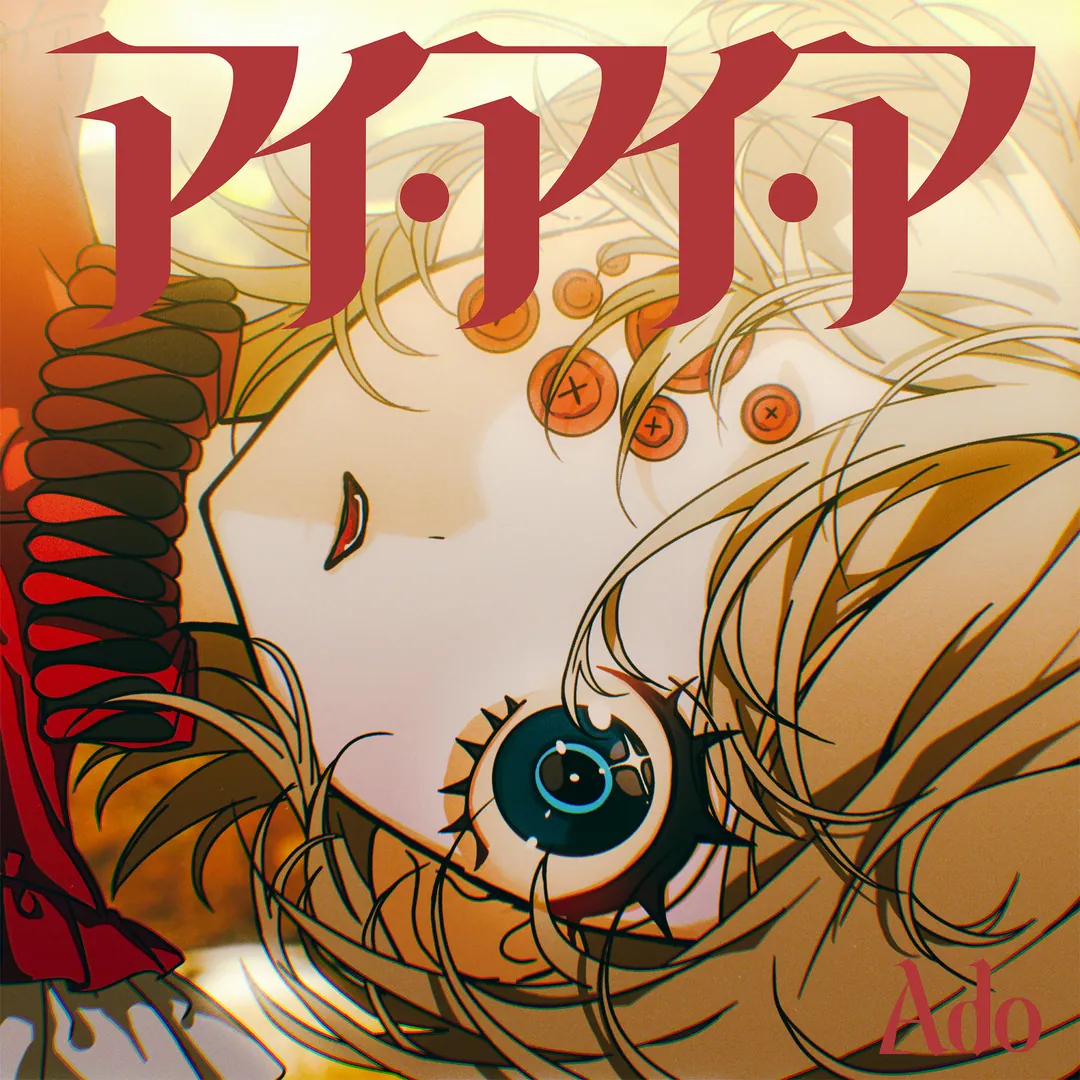
Fans who attended your dome tour got an early glimpse of your upcoming track ‘AiAiA.’ How would you describe the overall vibe of the track?
So it's really dark, but it also has this classic vibe to it as well. It's a bit unhinged, but not in an evil way. Maybe it's unhinged, kind of off the rails because it's so pure. And so it's got that kind of a little bit of a violence to it, but in a childish way.
Wow, that's interesting.
Looking back at your cover of ‘Aishite Aishite Aishite’ and ahead to ‘AiAiA,’ what feels most different about where you are now artistically?
So even though both tracks are written by Kikuo, ‘Aishite Aishite Aishite’ is a cover, which was included in my cover album. Although I did sing it in the tracklisting for my world tour, ‘AiAiA’ was written explicitly for me by Kikuo-san, so there's the obvious difference between one being a cover and the other being an original song.
I think for me, when it comes to covers, it’s about sort of being true to the world portrayed by the original song but adding my own colours to it. That would be my take on covers, whereas ‘AiAiA’ would be an original song of mine. So it’s more about how to sort of fit that unlimited amount of expressionism that I hold into this one song.
Your previous single ‘Vivarium’ was inspired by your forthcoming book Vivarium: Ado and Me. What was it like writing music that directly ties into your personal story?
So for ‘Vivarium’, I was working on the sort of postscript, the final notes after the song, and the book itself wasn't written by myself. I did talk a lot about my experiences, but they weren't written explicitly by me. So I was working on the final notes, and I was kind of thinking about all the emotions that were going through my mind.
So I'm a singer, obviously, and I'm not a writer. So I don't go about creating novels and releasing them to the world. But sort of the creative process of connecting that to my own music was something I really wanted to do, and I asked to do. And it was a very special experience for me in that sense.
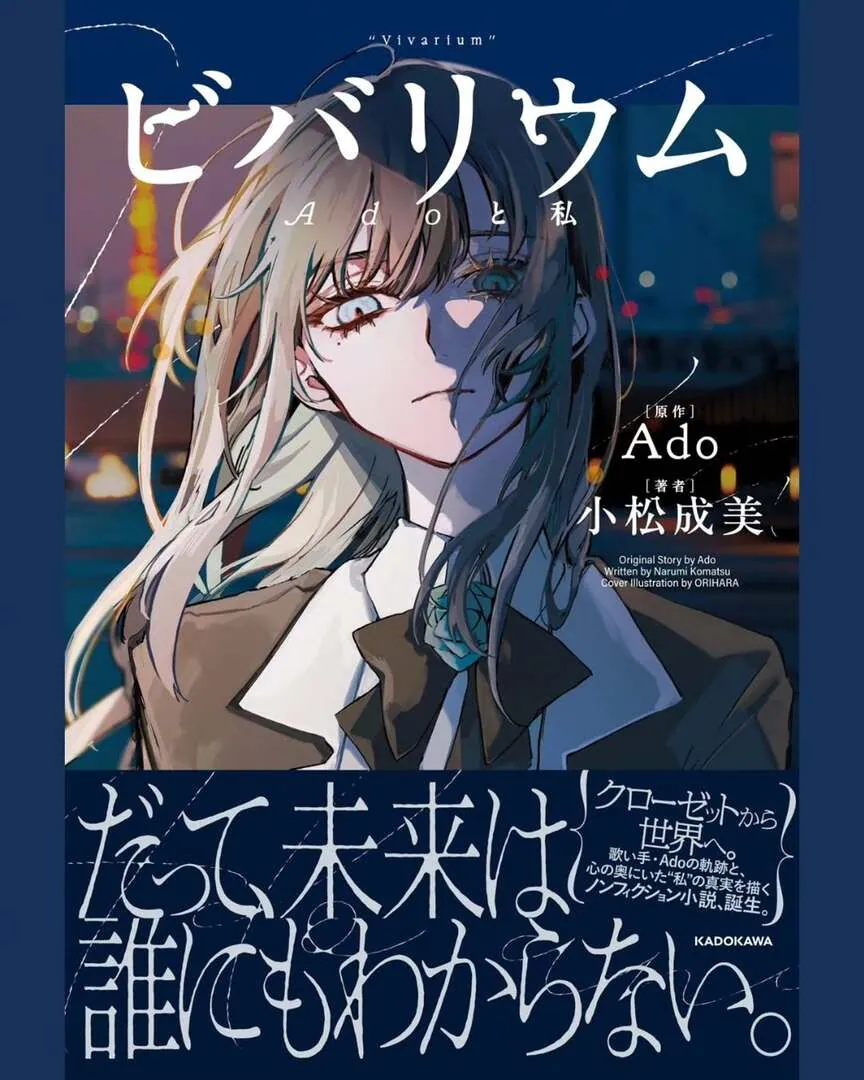
Looking back at your breakthrough with ‘Usseewa’ and now releasing something so personally written like ‘Vivarium’, how do you feel your voice as an artist has evolved?
As an album, well ‘Vivarium’ is my second piece of work, a song that I wrote myself, but when I started out with ‘Usseewa’, I didn’t really think about writing my own songs at that time. And even now, I sing songs that are written for me, that’s my main say, and that hasn't changed who I am as an artist.
But by experiencing the writing process with ‘Vivarium’, I think I've really grown and matured as an artist in terms of laying my emotions on the melody. So that is something that has made me evolve as an artist, especially compared to ‘Usseewa’ when I was still 18 years old. I think I've also mentally sort of evolved as well.
You’ve always kept your identity private. How do you feel that choice has influenced the way people connect with your music?
So, as you know, I basically don't show my identity. So in that sense, perhaps there may be people that think that it's harder to see where my heart is or what my inner thoughts are. But for me, I think that by focusing more on the song and my voice, there's a way to sort of be more empathetic or have people sense more empathy without showing my persona per se.
I think, in a way, it helps for my songs to reach people directly on an even more visceral level. But having said that, it's also quite difficult to imagine how that applies to other people because it's not me. I can't really speak for other people, but this is how I think it might be.
Yeah, that's like helping them focus on what's truly important.
Any exciting endeavours coming up that fans can look forward to?
Well, I think right now for fans in Japan, they're really looking forward to the two shows at Nissan Stadium. And then also I hear a lot from my overseas fans that they're really looking forward to going to LA for the Zipangu Festival, where it's a festival of Japanese artists and I will be the headliner. So it's something that I'm really looking forward to as well.
View this post on Instagram
That seems like an exciting lineup coming up.
Like what you read? Show our writer some love!
-