There are several ways for a musician to disappear. She can stop releasing records. She can retreat from touring, interviews and the endless obligation to turn private experience into public material. Or she can remain almost impossibly visible — performing in stadiums, collecting Grammys, appearing beside the most famous artists in the world — while keeping the most essential part of herself out of view.
In the six years since Punisher, Phoebe Bridgers has hardly been absent. She toured extensively, opened for Taylor Swift on The Eras Tour and reconvened with Lucy Dacus and Julien Baker as boygenius, whose the record became both a cultural event and a GRAMMY-winning triumph. Her voice appeared alongside SZA, Paul McCartney, MUNA, Lorde, The National and others. The machinery of celebrity continued to move around her.
But an artist can be everywhere and still be hiding.
Lost Weekend, Bridgers’ third solo album, is concerned with what happens when that hiding place no longer works. It is an album about time passing strangely: the years that disappear into work, grief and transformation, then return demanding to be understood. Its title suggests a brief lapse, a few misplaced days. The record itself accounts for something much larger.
During those years, Bridgers lost her father. She also fell in love. Lost Weekend was written in the unstable territory between those events, where one form of intimacy can make another absence feel newly immense. The album moves between bereavement and romance without treating either as a separate story. Instead, love throws grief into sharper relief, while grief lends love its urgency.
The result is described in the accompanying album materials as Bridgers’ roomiest and strangest record. That difference announces itself almost immediately. Its opening lines — “Crying in a suit and tie / but you should see the other guy” — arrive through a vocoder, placing a technological veil over one of contemporary songwriting’s most recognisable voices.
It is an appropriate entrance for a record interested in distance: between the singer and the listener, the adult and the child she once was, the person in pain and the person capable of describing it.
Bridgers has always understood how a small detail can carry the weight of an entire history. On Stranger in the Alps and Punisher, catastrophe often entered through the side door. A conversation, a car ride or an unremarkable room could suddenly disclose the dimensions of loneliness. Her writing invited close attention not by withholding emotion, but by locating it precisely.
On Lost Weekend, that precision remains. What has changed is the architecture surrounding it.
Guitars and synthesisers still lead the record, but songs are allowed to open, rupture and dissolve. Familiar forms give way to abrupt silences, ecstatic swells and flashes of noise. Certain musical ideas vanish almost as quickly as they arrive, only to return later with altered significance. The arrangements do not merely illustrate Bridgers’ lyrics. They behave like memory itself: involuntary, fragmentary and capable of flooding the present without warning.
“The music I’ve listened to the most for pleasure is probably ambient music,” Bridgers explained while discussing the album’s interludes and transitions. “When you’re listening, you can’t help but feel whatever it is that it’s trying to make you feel.”
For Bridgers, ambient music offers an alternative form of disclosure. A lyric can narrate an emotion, arranging it into language and sequence. Sound can bypass that organisation. It can establish a feeling before the listener knows what to call it.
“The method of emotional transfer from composer to listener is totally different,” she said, “than it is when relying on a lyric to tell you something.”
That philosophy gives Lost Weekend its peculiar emotional climate. Produced by Tony Berg, Ethan Gruska, Jack Antonoff and Bridgers, with additional production from Alex G, the album makes atmosphere part of its storytelling. Its spaces are not empty. They are charged with everything a sentence cannot comfortably contain.
This is not to say that Bridgers has abandoned the sharply plotted songwriting that made her famous. ‘Lost Boys’, the lead single, is immediate and melodic, complete with a perfectly placed “Yeah!” that turns release into something almost physical. ‘Haunted’ and ‘The Governor’s Waltz’ draw on her instinct for narrative, while ‘I Can’t Wait’ moves toward a startling moment of integration: “All my life, side by side / Hyde Jekyll Hyde / Finally together.”
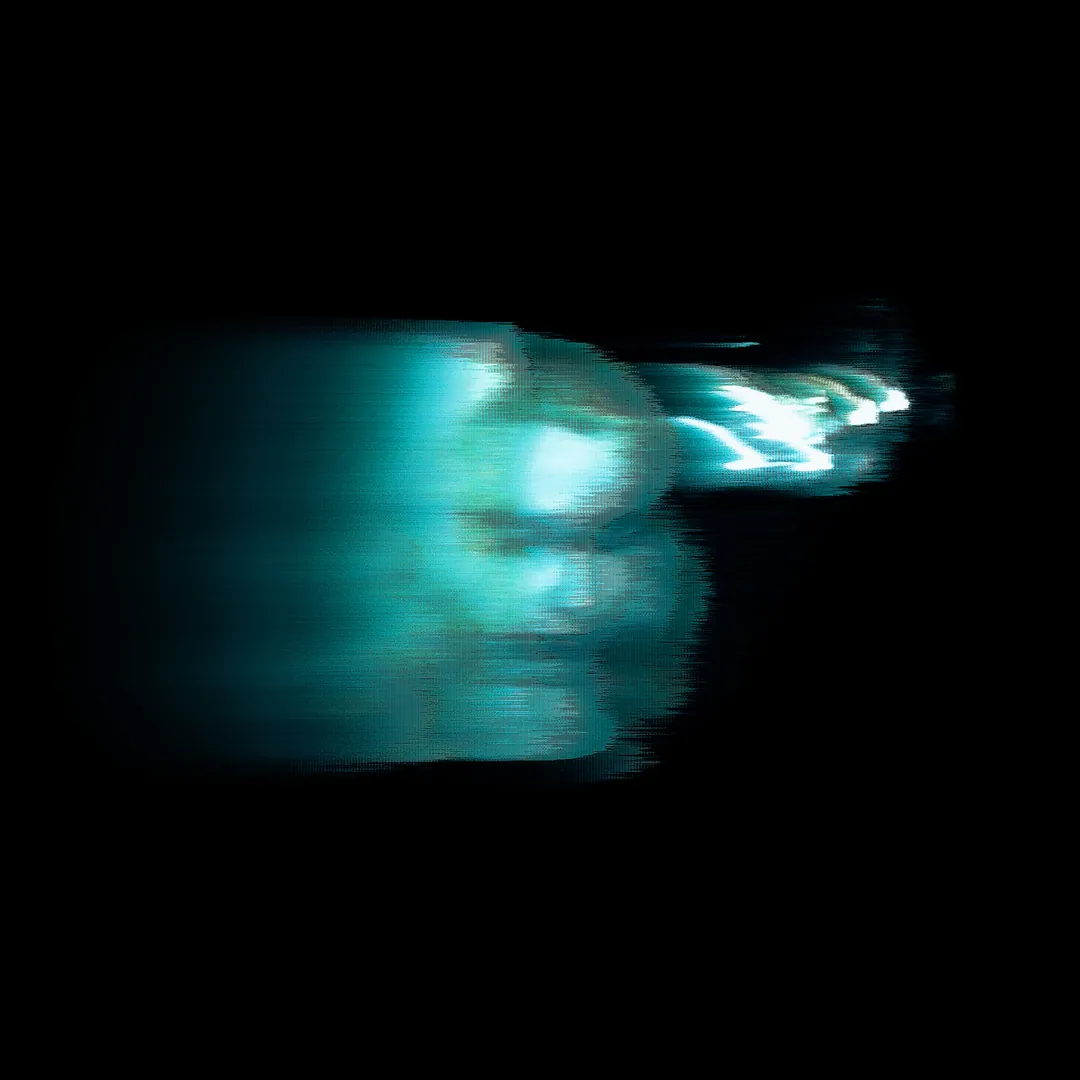
Even here, wholeness does not sound serene. It arrives as a confrontation between selves.
Throughout the album, phrases answer and contradict one another. “You know me, and I’ll never forgive you for that” is later inverted into “You love me, and I won’t ever let you forget.” An early image of witnessing violence — a fist through drywall, the narrator frozen in place — returns near the end as an adult inheritance: “I fought the wall, and the wall won.”
These echoes create the sense that the album is listening to itself. A line never belongs only to the song in which it appears. It accumulates meaning as the record proceeds, gathering the consequences of what comes after it.
At the centre of that network is ‘Still Standing’, in which Bridgers reckons with the death of her father, Tony Bridgers. The grief here is not presented as pure sorrow. It includes relief, anger, regret and the particular confusion of mourning someone who was also a source of pain.
“I found her bleeding over the sink / But when you said sorry, you were looking at me,” Bridgers sings, compressing a childhood scene into an image whose violence lies partly in its divided attention. An apology is offered, yet its intended recipient is unclear. The child becomes witness, intermediary and perhaps absolver.
View this post on Instagram
Such writing resists the cultural preference for uncomplicated grief. The dead do not become innocent simply because they are gone. Love does not erase fear. Anger does not cancel mourning. ‘Still Standing’ derives its power from Bridgers’ refusal to settle those contradictions on the listener’s behalf.
If grief is the album’s undertow, romance is its sudden intake of air.
Joy moves through ‘Liberty Tree’, while ‘Bobby’ expands that feeling to stadium scale. On ‘Kill Me’, the beginning of the relationship is rendered with such intensity that the surrounding sound appears to contract around Bridgers’ voice. Across these songs, falling in love is not an escape from loss. It is a new vulnerability arriving while the old one remains unresolved.
Bridgers’ singing has always made intimacy feel less like confession than proximity. Her voice rarely announces its force. It draws the listener closer until a nearly conversational phrase becomes unbearable. On Lost Weekend, that restraint is surrounded by arrangements capable of sudden enormity. The contrast allows tenderness to feel dangerous and volume to feel earned.
The album also documents a changing relationship with artistic visibility. Bridgers has spoken about becoming “world-weary” during its creation and wanting to step back from public life. Continuing to write seemed to guarantee the opposite: more attention, more interpretation and another cycle in which private experience would become public property.
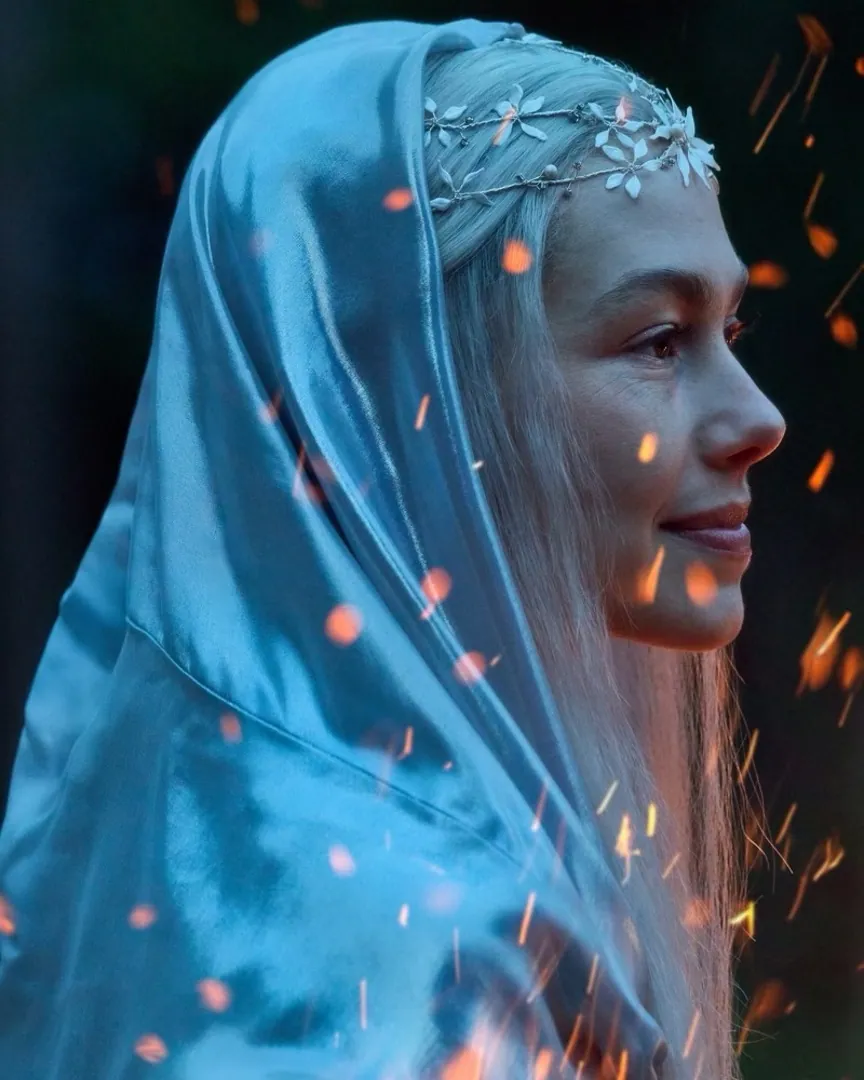
“I needed a different relationship to the music I was making and to the world in which it was going to appear,” she said. “The album’s about that, in a way.”
That relationship could not be forced into the conventional rhythm of writing, recording and promotion. Bridgers allowed the album to change over time, even when its centre remained unclear.
“The album is vastly different than it was when I started,” she said. “There are certain things that seem now like the heart of the album that weren’t part of it for a long time.”
Had she stopped earlier, Bridgers added, it would have felt “like walking off a cliff”. The delay was therefore not an absence of work. It was the work: waiting until the record could hold the person she had become, rather than preserve the artist she had been expected to remain.
That distinction matters. Lost Weekend is not merely an account of what happened during the years after Punisher. It is an argument for allowing experience to remain unresolved long enough to develop its own form.

On the closing ‘Lost Weekend (Reprise)’, Bridgers sings, “But if I ever come out of hiding / you won’t have to know how to find me again.”
The line is both invitation and boundary. To come out of hiding does not mean surrendering every secret. It means becoming visible on one’s own terms.
Lost Weekend finds Bridgers returning not because she has solved the contradictions that shaped it, but because she has discovered how to let them coexist. Grief and relief. Devotion and fear. Withdrawal and the desire to be found. Some lost time cannot be recovered. It can only be transformed into something spacious enough to inhabit.
Lost Weekend is scheduled for release on 14 August via Dead Oceans.
Like what you read? Show our writer some love!
-